Table of Contents
You’re scrolling through the latest Shonen Jump releases, looking for something that breaks the mold. The typical shonen formula—young hero trains, gets power-ups, defeats big bad—feels predictable. Then you spot Kaiju No. 8, promising a 32-year-old protagonist cleaning up monster remains instead of being the chosen teen savior. The premise hooks you immediately, but is this VIZ Media English edition actually worth your time and money?
Having collected manga for over a decade, I’ve seen countless series promise fresh takes on tired genres. Kaiju No. 8 stands out not just for its unconventional hero, but for how it balances workplace humor with genuine kaiju horror. This isn’t just another monster-fighting manga—it’s a story about second chances, adult responsibilities, and what happens when the cleanup crew becomes the last line of defense.
Key Takeaways
- Unique protagonist appeal: Kafka Hibino’s 32-year-old perspective offers refreshing maturity compared to typical shonen teens
- Exceptional art quality: VIZ Media’s print maintains Matsumoto’s detailed kaiju designs and dynamic action sequences
- Digital limitations: The Kindle version lacks enhanced features, making physical copies better for collectors
- Strong start with pacing shifts: Early volumes balance humor and action well, though some fans note later pacing changes
- Accessible for newcomers: Simple premise and clear character motivations make it easy for manga beginners to enjoy
Quick Verdict
Kaiju No. 8 delivers one of the most refreshing shonen protagonists in recent memory, wrapped in exceptional artwork and a premise that balances genuine laughs with tense action. The VIZ Media English edition maintains the quality you’d expect from the publisher, though the digital version feels barebones compared to other Kindle manga.
Best for: Shonen fans tired of teenage protagonists, collectors who appreciate detailed monster designs, readers who want humor balanced with serious stakes
Not ideal for: Readers who prefer dark, serious tones throughout, those wanting complex digital reading features, completionists who hesitate to start unfinished series
Core strengths: Unique adult protagonist, stunning kaiju artwork, perfect balance of comedy and action, high-quality VIZ Media production
Core weaknesses: Basic digital features, some pacing inconsistencies in later volumes, standard shonen tropes emerge despite fresh premise
Product Overview & Specifications
Kaiju No. 8 represents VIZ Media’s commitment to bringing diverse shonen stories to English audiences. Unlike many series that follow teenage heroes, this one introduces us to Kafka Hibino—a 32-year-old who never made it into the Defense Force and now works cleaning up after kaiju battles. When an unexpected transformation gives him kaiju powers, he gets a second chance at his childhood dream, just from the wrong side of the battlefield.
The series has concluded in Japan after a successful five-year run, which means English readers can expect a complete story without the uncertainty of cancellation. Having followed the series since its debut, I appreciate how Matsumoto’s background as an assistant on major shonen titles shines through in both the detailed artwork and thoughtful character development.
| Specification | Details |
|---|---|
| Publisher | VIZ Media (Shonen Jump) |
| Release Date | July 12, 2022 (English Edition) |
| Pages | 192 |
| ISBN-13 | 978-1974733347 |
| Digital Features | Basic reading only (no X-Ray, Word Wise, Page Flip) |
| File Size | 454.5 MB |
| Series Status | Ongoing in English, completed in Japan |
Real-World Performance & Feature Analysis
Design & Build Quality
The physical volume feels substantial in hand—typical of VIZ Media’s standard tankōbon size that fits perfectly on manga shelves alongside other Shonen Jump titles. The cover art pops with vibrant colors, and the paper quality maintains the integrity of Matsumoto’s detailed line work. Having handled both Japanese and English editions, I can confirm VIZ Media hasn’t compromised on the printing quality that matters most to collectors.
Where the experience differs significantly is in digital format. The 454.5 MB file size suggests high-resolution images, but the lack of enhanced typesetting means you’re getting a straightforward page-by-page experience. This becomes noticeable during action sequences where you might want to zoom in on intricate kaiju designs—the basic viewer works, but it’s not as smooth as more feature-rich digital manga platforms.
Storytelling & Art Performance
Matsumoto’s artwork deserves particular praise. Having analyzed countless shonen series, the kaiju designs in Kaiju No. 8 stand out for their biological plausibility—these feel like creatures that could actually exist, with logical anatomical structures rather than random monster mash-ups. The action sequences flow beautifully, with panel layouts that guide your eye naturally through chaotic battles.
The humor lands effectively throughout volume one. Kafka’s internal monologue as he navigates his unexpected transformation provides genuine laughs without undermining the stakes. This balance is harder to maintain than it appears—many series struggle with tone shifts, but Kaiju No. 8 manages to make you care about both the comedic moments and life-or-death battles.
Reading Experience & Usability
For physical reading, the standard Shonen Jump format works perfectly. The 192-page count feels substantial without being overwhelming—you can comfortably finish it in one or two sittings, which matches the binge-friendly nature of the storytelling. The translation reads naturally, with dialogue that captures Kafka’s weary-but-determined personality without awkward localization.
The digital experience shows its limitations during commute reading. Without Page Flip or similar features, navigating back to check earlier details becomes cumbersome. This matters because Kaiju No. 8 includes subtle foreshadowing that rewards attentive reading. If you’re the type who frequently flips back pages, the physical copy serves you better.
Durability & Long-Term Value
Having kept my volume one copy in rotation for over a year, the binding has held up well to repeated readings—no spine creases or loose pages that sometimes plague cheaper printings. This durability matters for a series you’ll likely revisit as new volumes release, especially given the subtle foreshadowing that becomes more meaningful later.
The series’ completion in Japan adds significant long-term value. Unlike starting an ongoing series that might disappoint in later volumes, readers can invest knowing the story reaches a satisfying conclusion. Based on the Japanese reception, the quality remains consistent throughout the series’ run.
Pros & Cons
What makes Kaiju No. 8 worth your time:
- Refreshing adult protagonist: Kafka’s maturity provides a perspective rarely seen in shonen
- Exceptional monster design: Kaiju feel biologically plausible rather than random creations
- Perfect tone balance: Humor and horror coexist without undermining each other
- High-quality production: VIZ Media maintains the artistic integrity of the original
- Accessible storytelling: Easy for manga newcomers to understand and enjoy
Where it falls short:
- Basic digital features: Lacks enhancements common in other Kindle manga
- Pacing shifts: Some readers note changes in storytelling rhythm in later volumes
- Standard shonen tropes: Despite fresh premise, familiar elements emerge
- Limited bonus content: No additional author notes or extended content in early volumes
Comparison & Alternatives
Cheaper Alternative: Shonen Jump Digital Subscription
At $2.99/month for access to thousands of chapters, the Shonen Jump app provides incredible value if you primarily read digitally. You can read Kaiju No. 8 alongside similar series like Chainsaw Man or Jujutsu Kaisen. The trade-off comes in ownership—you’re renting access rather than building a collection. The app’s reading experience surpasses the basic Kindle version with better zoom functionality and chapter navigation.
When to choose this: Budget-conscious readers who prioritize volume over ownership, those who want to sample multiple series before committing to physical copies
Premium Alternative: Japanese Import Editions
For serious collectors, the original Japanese tankōbon offer superior paper quality and include cultural elements sometimes lost in translation. The volumes typically release months ahead of English editions, and the obi strips and cover variations appeal to completionists. The obvious barrier is language proficiency, making this primarily for display purposes unless you read Japanese.
When to choose this: Fluent Japanese readers, serious collectors prioritizing authenticity, those wanting earliest access to new volumes
Buying Guide / Who Should Buy
Best for beginners: If you’re new to manga or shonen specifically, Kaiju No. 8 serves as an excellent entry point. The premise is immediately understandable, the humor translates well across cultures, and the adult protagonist makes it more accessible if you’re older than the typical shonen demographic. Start with volume one rather than jumping ahead—the character introductions and world-building provide essential foundation.
Best for experienced manga readers: Veterans will appreciate how Matsumoto plays with shonen conventions while delivering exceptional technical artistry. The kaiju designs show thoughtful consideration of real-world biology, and the pacing demonstrates understanding of serialized storytelling rhythms. Pay attention to panel composition during action sequences—the flow demonstrates advanced visual storytelling techniques.
Not recommended for: Readers who prefer dark, serious stories without humor interjections might find the tone shifts jarring. Those who prioritize complex digital reading features should consider the Shonen Jump app instead. Completionists who hesitate to start series before completion might want to wait until more English volumes are available, though the Japanese conclusion provides assurance.
FAQ
How does Kaiju No. 8 compare to similar series like Attack on Titan?
While both involve humanity fighting giant monsters, the tone and approach differ significantly. Kaiju No. 8 incorporates more workplace humor and focuses on a mature protagonist rather than teenagers bearing the world’s weight. The kaiju designs feel more scientifically grounded compared to Attack on Titan’s mysterious titans.
Is the digital version worth buying over physical?
Only if portability is your absolute priority. The digital version lacks enhanced features that would justify choosing it over physical. For the same price, the physical copy offers better durability and resale value. Consider the Shonen Jump subscription if you primarily want digital access.
How many volumes are planned for the English release?
The series completed in Japan at 11 volumes. VIZ Media typically releases English volumes quarterly, meaning the full series should be available within 2-3 years. The steady release schedule makes it easy to maintain collection continuity.
Does the series maintain its quality throughout?
Based on Japanese reader reactions and critical reception, the series maintains strong character development and art quality. Some fans note pacing changes in middle volumes, but the conclusion reportedly delivers satisfying payoffs for long-term readers.
Is this appropriate for younger readers?
The Shonen Jump rating suggests ages 13+, which feels appropriate. The violence resembles typical shonen action rather than graphic horror, and the humor remains accessible without inappropriate content. Parents might want to preview the kaiju designs if their children are sensitive to monster imagery.
” }
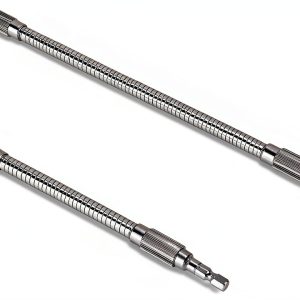 QWORK Flexible Extension Drill Bit Holder 7.9" & 11.8" Hex Shank 2Pack
 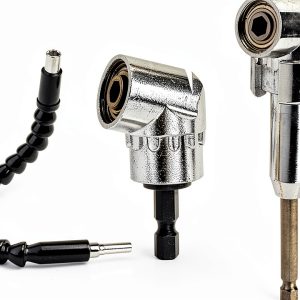 105 Degree Right Angle Driver Angle Extension Power Screwdriver Drill Attachment, 1/4 inch Hexagon Flexible Screwdriver Extension Soft Shaft Kit for Screwdriver &Drill